
Wide-Range Coupling · DN50–DN600
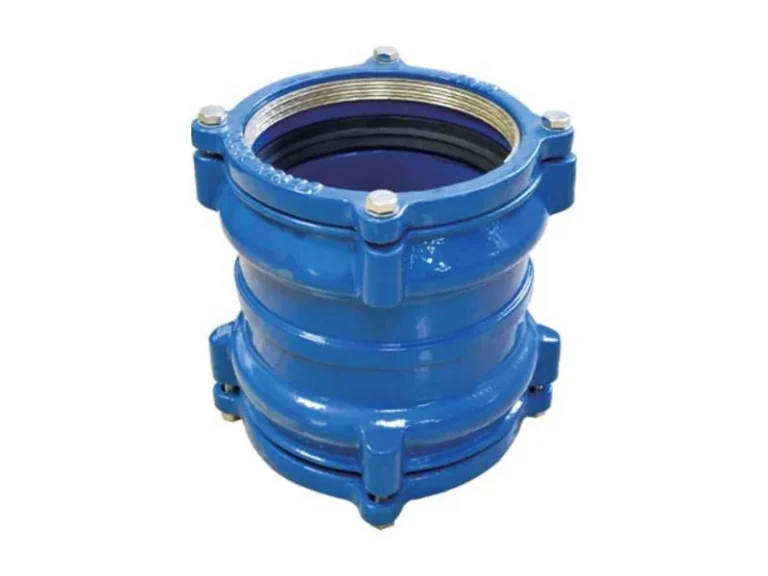
Universal Pipe Coupling
Joins two plain-end pipes and repairs a cut or burst main without welding. Each size seals on a wide range of outside diameters, so in most sizes one coupling fits ductile iron, steel and PVC pipe of the same DN.
- Size Range: DN50–DN600, pipe OD 59–630 mm
- Pressure: PN10 / PN16
- Pipes: Ductile iron, cast iron, steel, PVC-U, asbestos cement; PE with a stiffener
- Deflection: Up to 4°, for slight misalignment
- Body: Ductile iron EN-GJS-400-15 end rings, steel or ductile iron sleeve
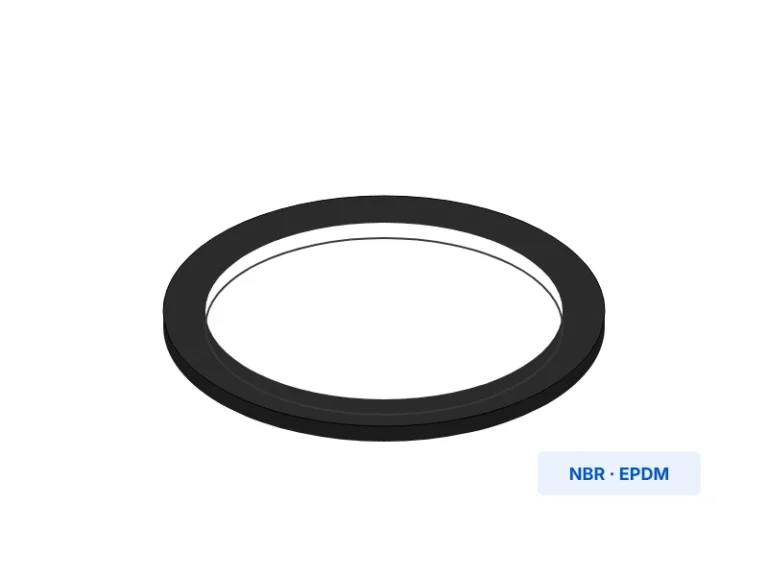
- Gasket: EPDM for water and drinking water; NBR for oil
- Finish: Blue fusion-bonded epoxy, 250 µm min (DIN 30677-2)
Universal Coupling Dimensions
PN16. All dimensions in mm. Range is the pipe OD the coupling seals on. L is the sleeve length; D is the end ring OD.
Swipe the table →
| DN | Pipe OD range | L | D | Bolts | |
|---|---|---|---|---|---|
| Size | Qty | ||||
| 50 | 59 – 72 | 102 | 165 | M12×180 | 2 |
| 65 | 72 – 85 | 102 | 185 | M12×180 | 2 |
| 80 | 88 – 103 | 102 | 185 | M12×180 | 4 |
| 100 | 109 – 128 | 102 | 218 | M12×180 | 4 |
| 125 | 132 – 146 | 102 | 250 | M12×180 | 4 |
| 150 | 159 – 182 | 102 | 272 | M12×200 | 4 |
| 175 | 192 – 210 | 130 | 312 | M12×200 | 4 |
| 200 | 218 – 235 | 130 | 335 | M12×220 | 4 |
| 250 | 272 – 289 | 130 | 405 | M12×220 | 6 |
| 300 | 315 – 332 | 130 | 460 | M12×220 | 6 |
| 300 | 322 – 339 | 130 | 435 | M12×220 | 6 |
| 350 | 340 – 360 | 150 | 455 | M16×250 | 6 |
| 350 | 357 – 368 | 150 | 518 | M16×250 | 8 |
| 350 | 374 – 391 | 150 | 568 | M16×250 | 8 |
| 400 | 400 – 429 | 150 | 580 | M16×250 | 8 |
| 400 | 418 – 435 | 150 | 580 | M16×250 | 8 |
| 400 | 425 – 442 | 150 | 625 | M16×260 | 8 |
| 450 | 455 – 472 | 150 | 665 | M16×260 | 10 |
| 500 | 500 – 532 | 150 | 690 | M16×260 | 10 |
| 500 | 527 – 544 | 150 | 715 | M16×260 | 10 |
| 500 | 555 – 572 | 150 | 715 | M16×260 | 10 |
| 600 | 600 – 630 | 150 | 790 | M16×260 | 10 |
Some sizes have more than one range, because ductile iron, steel and PVC pipes of the same DN differ in OD. Choose by the OD you measure, not by DN. Larger sizes, step couplings and long sleeves are made to order.
Will It Fit Your Pipes?
Pipes of the same DN have different ODs. Pick each pipe, or type the OD you measured, and see which size seals on both.
Find the coupling for your two pipes
Pipe A
Pipe B
Nominal ODs from ISO 2531, EN 10220, ASME B36.10, ISO 1452 / 4427, BS 3505 and AWWA C151 / C900. Old and imported pipes vary — if in doubt, measure.
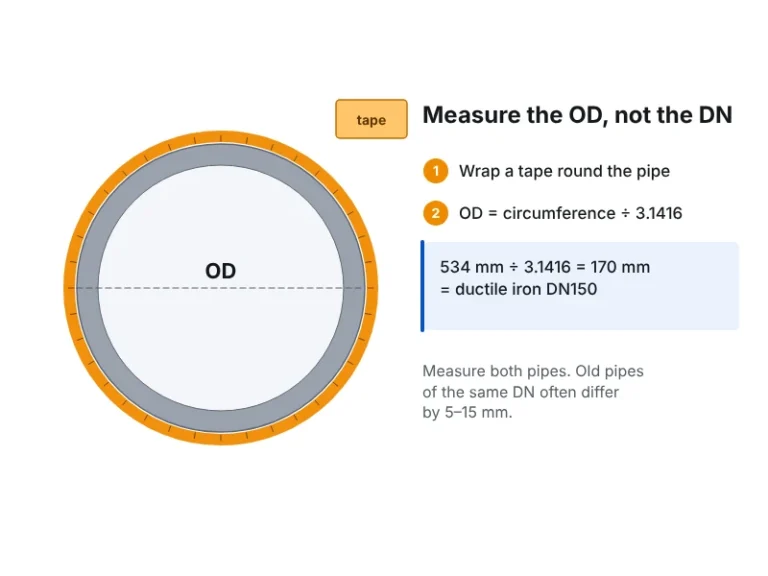
How to measure
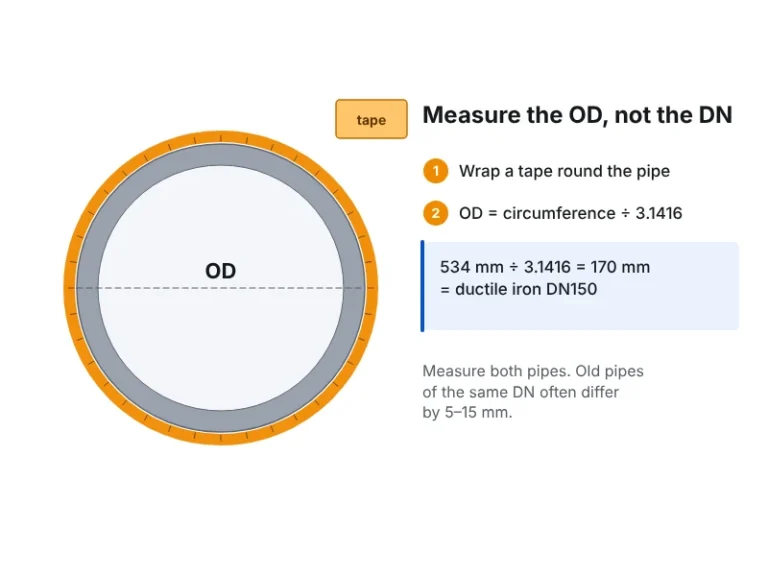
- Measure: wrap a tape round the pipe and divide by 3.1416.
- Both ends: old pipes of the same DN often differ by 5–15 mm.
- Not sure? send a photo of the pipe and the tape reading.
How It’s Built
Four parts. Tightening the bolts pulls the end rings in and squeezes each gasket onto its pipe.
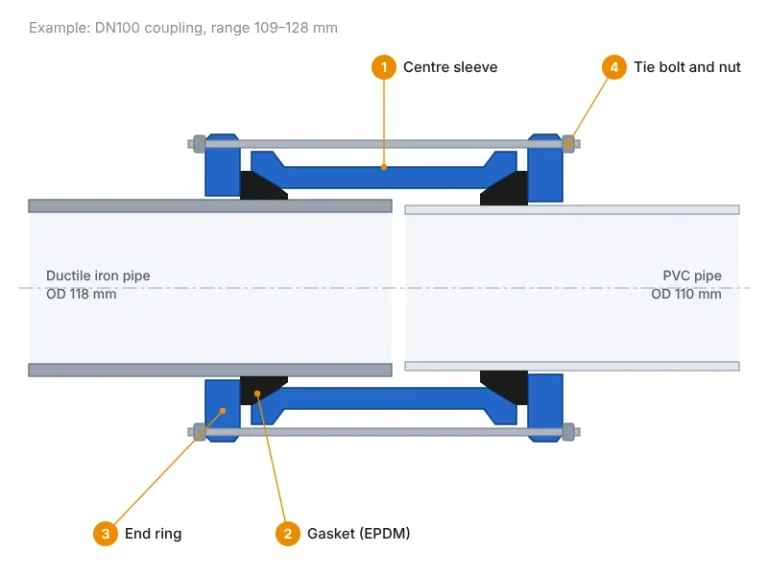
- 1. Centre sleeve: — Steel (EN 10025) or ductile iron. Bridges the gap between the pipe ends.
- 2. Gaskets: — Two wedge-section EPDM rings (EN 681-1), wide enough to seal anywhere in the range.
- 3. End rings: — Ductile iron EN-GJS-400-15. The bolts draw them in and press the gaskets into the sleeve mouth.
- 4. Tie bolts: — Run from end ring to end ring. Zinc-plated grade 4.8 as standard; 8.8, Dacromet or stainless on request.
- Note: — Nothing grips the pipe. The coupling seals, but it does not stop the pipes pulling apart.
Coupling, Flange Adaptor or Dismantling Joint?
All three are bolted gasket joints. What they connect, and whether they hold the pipe in, is different.
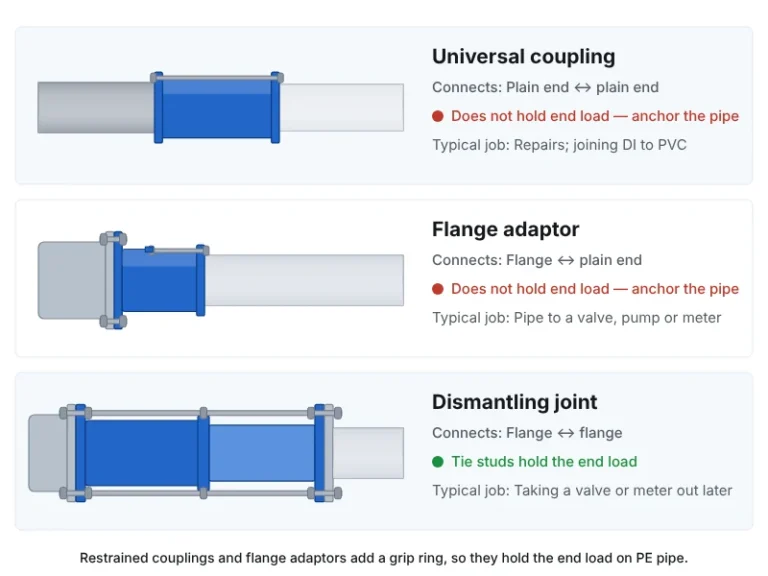
Swipe the table →
| Universal coupling | Restrained coupling | Flange adaptor | Dismantling joint | |
|---|---|---|---|---|
| Connects | Plain end + plain end | PE plain end + PE plain end | Flange + plain end | Flange + flange |
| Holds the end load | No — anchor the pipe | Yes — grip rings | No — anchor the pipe | Yes — tie studs |
| Pipe OD tolerance | Wide range per size | One PE OD per size | Wide range per size | Flanged both ends |
| Angular deflection | Up to 4° | Up to 3° | Up to 4° | None once locked |
| Main job | Repairs, joining different pipes | PE repairs without fusion | Pipe to valve, pump or meter | Taking valves and meters out |
Choose a universal coupling when
Pipes:
both ends are plain pipe
Anchors:
the line is anchored or thrust-blocked
Materials:
the two pipes are different
Choose a restrained coupling when
Pipe:
it is PE, which pulls out
No anchor:
there is no room for a thrust block
Location:
near a bend, tee, valve or dead end
Materials, Gasket and Coating
Standard materials are below. Tell us the medium and where the pipe runs, and we match the gasket and finish.
Swipe the table →
| Part | Standard material | Standard | Options |
|---|---|---|---|
| Centre sleeve | Steel | EN 10025 | Ductile iron EN-GJS-400-15; stainless steel |
| End rings | Ductile iron EN-GJS-400-15 | EN 1563 | — |
| Gaskets | EPDM | EN 681-1 | NBR for oil |
| Bolts and nuts | Steel grade 4.8, zinc plated | ISO 898-1 | 8.8, Dacromet, stainless A2 / A4 |
| Coating | Fusion-bonded epoxy, blue, 250 µm min | DIN 30677-2 | Other colours, thicker coat |
EPDM gasket (standard)
For: water, drinking water, sewage, sea water.
Temperature: −10 to +70 °C
Not for: oil and fuel.
NBR gasket
For: oily water, fuel, mineral oil.
Temperature: −10 to +70 °C
Not for: drinking water.
Bolts and finish
Blue epoxy: buried lines, chambers, pump houses.
Stainless bolts: sea water, wet chambers.
Petrolatum tape wrap: aggressive soil.
The gasket is the only rubber part. Choose it by the medium; choose the bolts and finish by where the coupling is installed.
Pressure, Temperature and End Thrust
The coupling holds pressure. It does not hold the pipe in — the thrust has to go somewhere else.
Ratings
- Working pressure: PN10 or PN16 — state it when you order
- Test: hydrostatic, 1.5 × PN, to EN 12266-1
- Temperature: −10 to +70 °C with EPDM
- Media: water, drinking water, sewage, neutral liquids
End thrust to anchor (kN)
Swipe the table →
| Size | Pipe OD (DI), mm | PN10 | PN16 | PN16 test (24 bar) |
|---|---|---|---|---|
| DN100 | 118 | 11 | 17 | 26 |
| DN150 | 170 | 23 | 36 | 54 |
| DN200 | 222 | 39 | 62 | 93 |
| DN250 | 274 | 59 | 94 | 142 |
| DN300 | 326 | 83 | 134 | 200 |
| DN400 | 429 | 145 | 231 | 347 |
| DN500 | 532 | 222 | 356 | 533 |
| DN600 | 635 | 317 | 507 | 760 |
F = P × π/4 × OD². This is the force that pushes the pipe out of the joint at a closed valve, a bend or a dead end. A plain coupling or flange adaptor does not hold it — a thrust block, an anchor or a restrained joint must.
Use thrust blocks or anchors at bends, tees, valves and dead ends — or use the restrained coupling.
Installing a Universal Coupling
Four steps. Even bolt tension matters more than the final number.
Check the OD
Both pipe ODs must sit inside the range on the label. Cut the ends square; file off burrs and weld beads.
Clean and mark
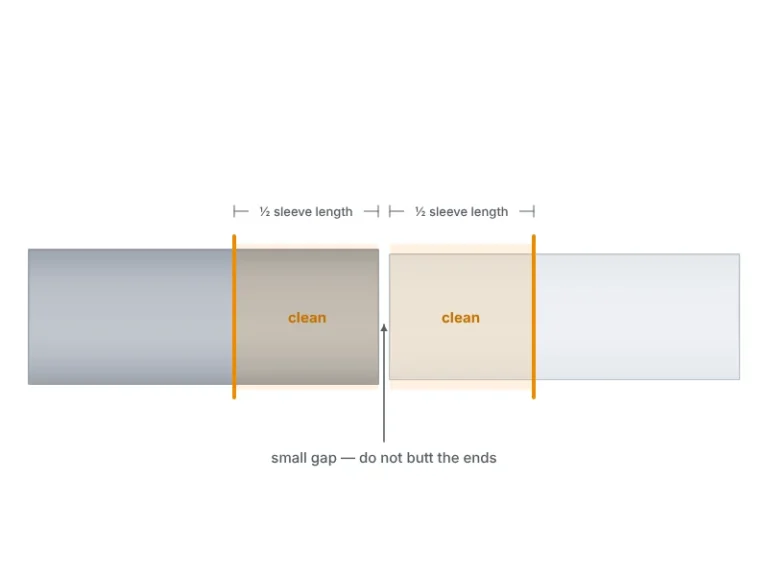
Clean each end a little past half the sleeve length and mark it. Leave a small gap between the pipes.

Centre the coupling
Slide it over one pipe, line up the other, then slide it back until the marks are equal. No oil or grease on the gaskets.
Tighten evenly
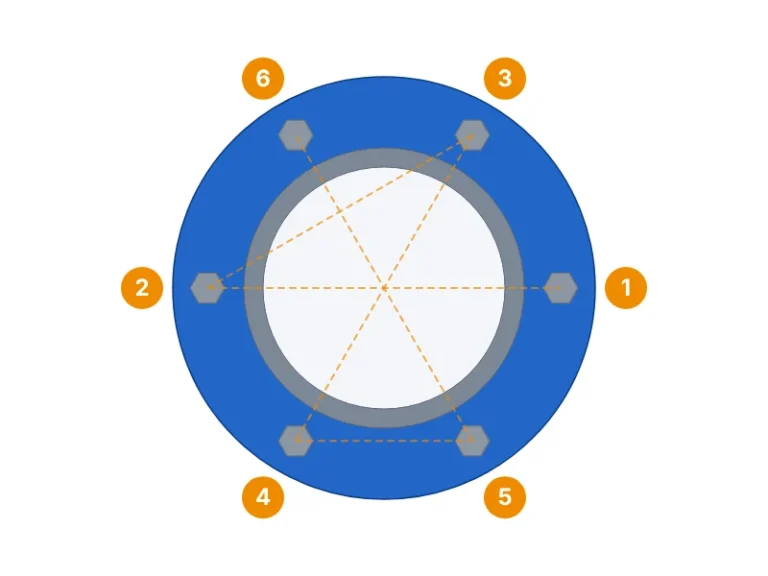
Opposite bolts, a turn or two at a time, until the end rings sit square. Typical torque: M12 55–65 N·m, M16 95–110 N·m.
Options
Add these when the job needs them — each one is priced separately.

Stainless steel bolts
A2 or A4 bolts and nuts for sea water, wet chambers and outfalls.
NBR gasket
For oily water, fuel and mineral oil. EPDM stays standard for water.

Long sleeve
A longer centre sleeve bridges a missing length when a pipe piece can’t be added.
Step coupling
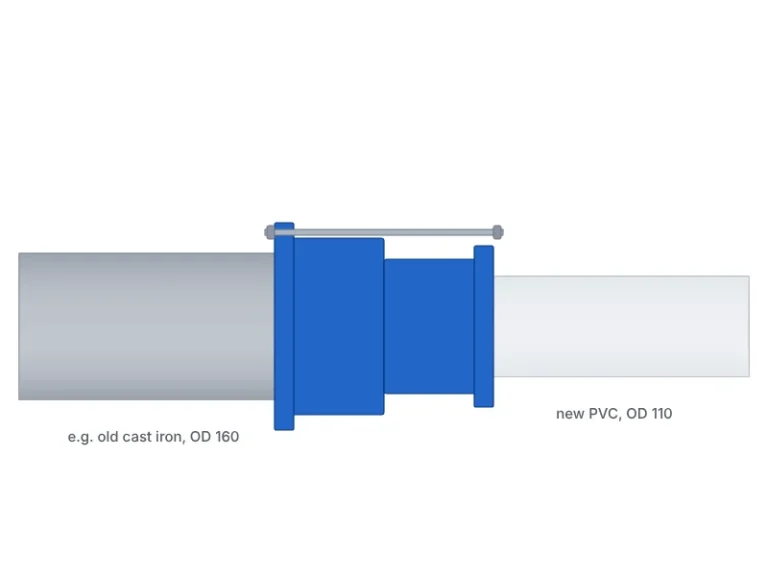
Two different ranges in one coupling, for pipes no single size covers.
Why Buy From Our Factory
A coupling is simple. What decides whether it works on site is the right range for both pipes — then the price.
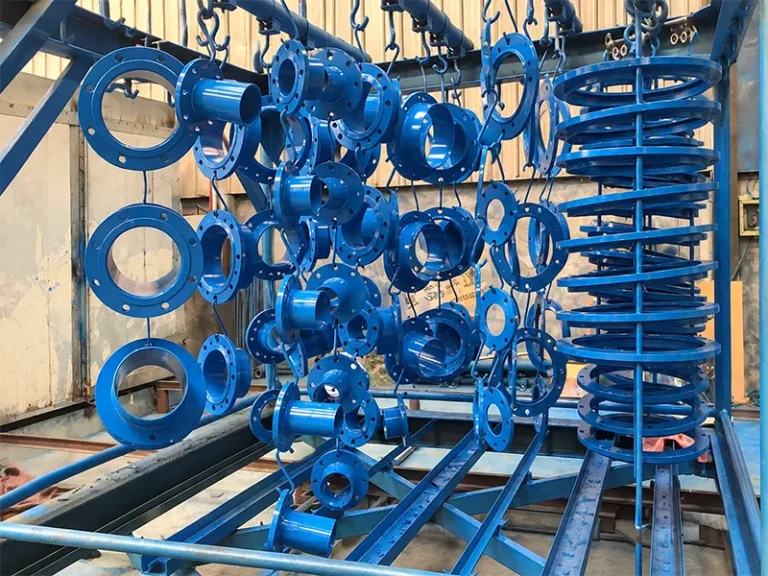
Pipe OD checked before we quote
Send the pipe materials or the ODs you measured. We confirm the range for each end and send it back before production.
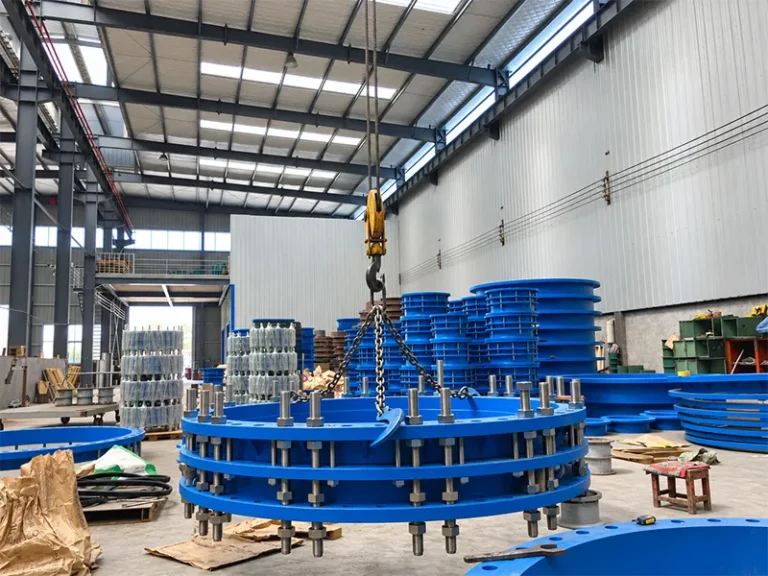
Couplings, adaptors and joints in one order
Couplings, flange adaptors, dismantling joints and rubber joints come from one factory and ship in one container.
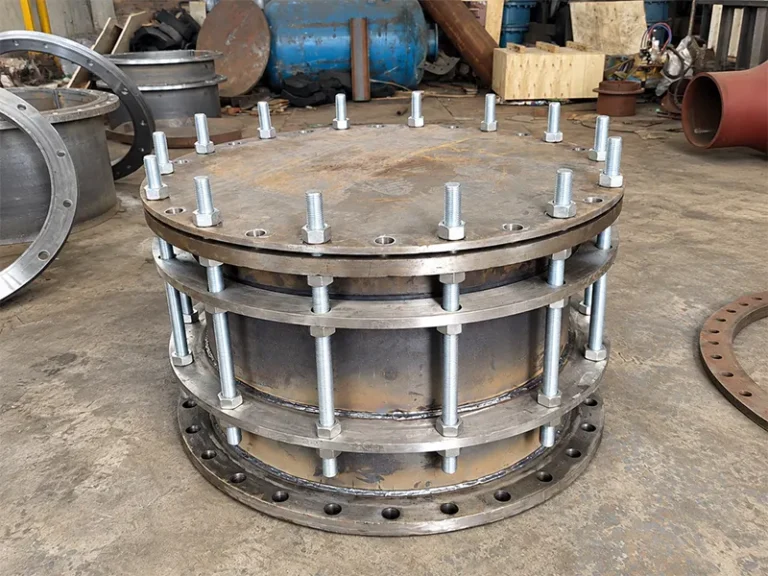
Pressure tested
Hydrostatic test at 1.5 × PN to EN 12266-1. Test report on request.
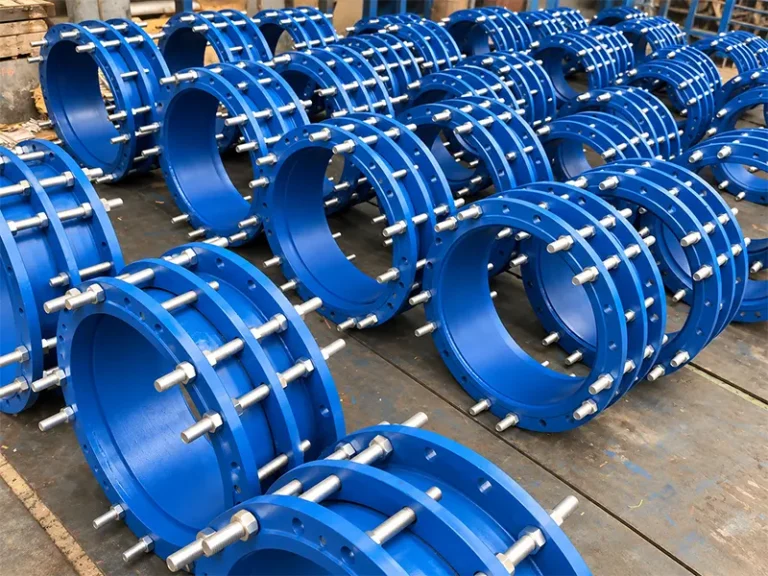
Factory price, quoted the same day
You buy from the production line, not through a trader. Send the size, pressure and quantity, and get a price the same working day.
Where It’s Installed

Burst main repairs
Cut out the damaged length, drop in a new piece and close both ends — no welding, no flanges.

Old pipe to new
Ductile iron to PVC, steel to AC: one coupling covers both when the ODs fall in one range.

New fittings in old mains
Two couplings let you add a tee, a meter run or a valve spool to an existing line.
In Service
Universal couplings from our factory, photographed by customers on site.
Universal Coupling Price
What you pay depends on a few choices. Send them and we quote the same day.
What changes the price
- Size : DN, and how wide the range is
- Pressure : PN10 or PN16
- Sleeve : standard, long or step
- Bolts : zinc-plated 4.8, Dacromet or stainless
- Gasket : EPDM or NBR
- Quantity : price breaks at 100 / 200 pcs
Reference price
| Size | Price per piece |
|---|---|
| DN100 | Get today’s price → |
| DN150 | Get today’s price → |
| DN200 | Get today’s price → |
| DN300 | Get today’s price → |
| DN400 | Get today’s price → |
| DN600 | Get today’s price → |
PN16, EPDM gasket, zinc-plated bolts, blue epoxy, EXW Gongyi. Prices follow iron and steel costs — send your sizes and we quote the same day.
Downloads
Datasheets, guides and references for submittals.
Universal coupling
For all couplings and flange adaptors
Frequently Asked Questions
What is a universal coupling?
A bolted sleeve joint for two plain-end pipes. A centre sleeve bridges the gap; a gasket at each end is pressed onto the pipe by an end ring. Each size seals on a wide range of ODs, so it can join different pipe materials.
Can it join two different pipe materials?
Yes, if both ODs fall in the same range — for example ductile iron OD 118 and PVC OD 110 both fit DN100 (109–128 mm). If they don’t, use a step coupling. The size finder above checks it for you.
Does a universal coupling stop the pipes pulling apart?
No. It seals but does not hold end load. Anchor the pipe at bends, tees, valves and dead ends, or use a restrained coupling.
Can I use it on PE pipe?
Only with a stainless steel stiffener in each pipe end and the pipe anchored. PE pulls out under pressure and temperature change, so for PE we recommend the restrained universal coupling.
How much misalignment can it take?
Up to 4° in total. Use it for slight misalignment and settlement, not to make a bend.
Is it suitable for drinking water?
Yes, with the standard EPDM gasket and epoxy coating. Tell us the approval your project needs (for example WRAS or NSF/ANSI 61) and we confirm the certificate before quoting.
What do I need to send for a quote?
The pipe material and OD of both ends (or the DN and pipe standard), working pressure, medium, quantity and destination port.
What is the MOQ and lead time?
MOQ 1 pcs. Common sizes ship in 5-7 days; large diameters and special orders take 15-30 days.
Related Products

Universal Flange Adaptor
- Type: Flange × plain end, wide range
- Size Range: DN50–DN600
- Use: Pipe to valve, pump or meter
Restrained Universal Coupling
- Type: PE × PE, grip rings
- Size Range: DE63–DE1200
- Use: PE repairs without fusion

Restrained Flange Adaptor
- Type: Flange × PE pipe, grip ring
- Size Range: DE63–DE1200
- Use: PE to valves and pumps

Double Flanged Dismantling Joint
- Type: VSSJAF (C2F), tie studs
- Size Range: DN65–DN3200
- Use: Removing valves and meters
Send Your Pipe ODs, Pressure and Quantity
We reply with the size, a drawing and a price within 24 hours on working days.
Contact Us
Tell us both pipe materials or ODs, the working pressure, the medium and the quantity. A site photo helps when the pipe is old.